
Learn more about:
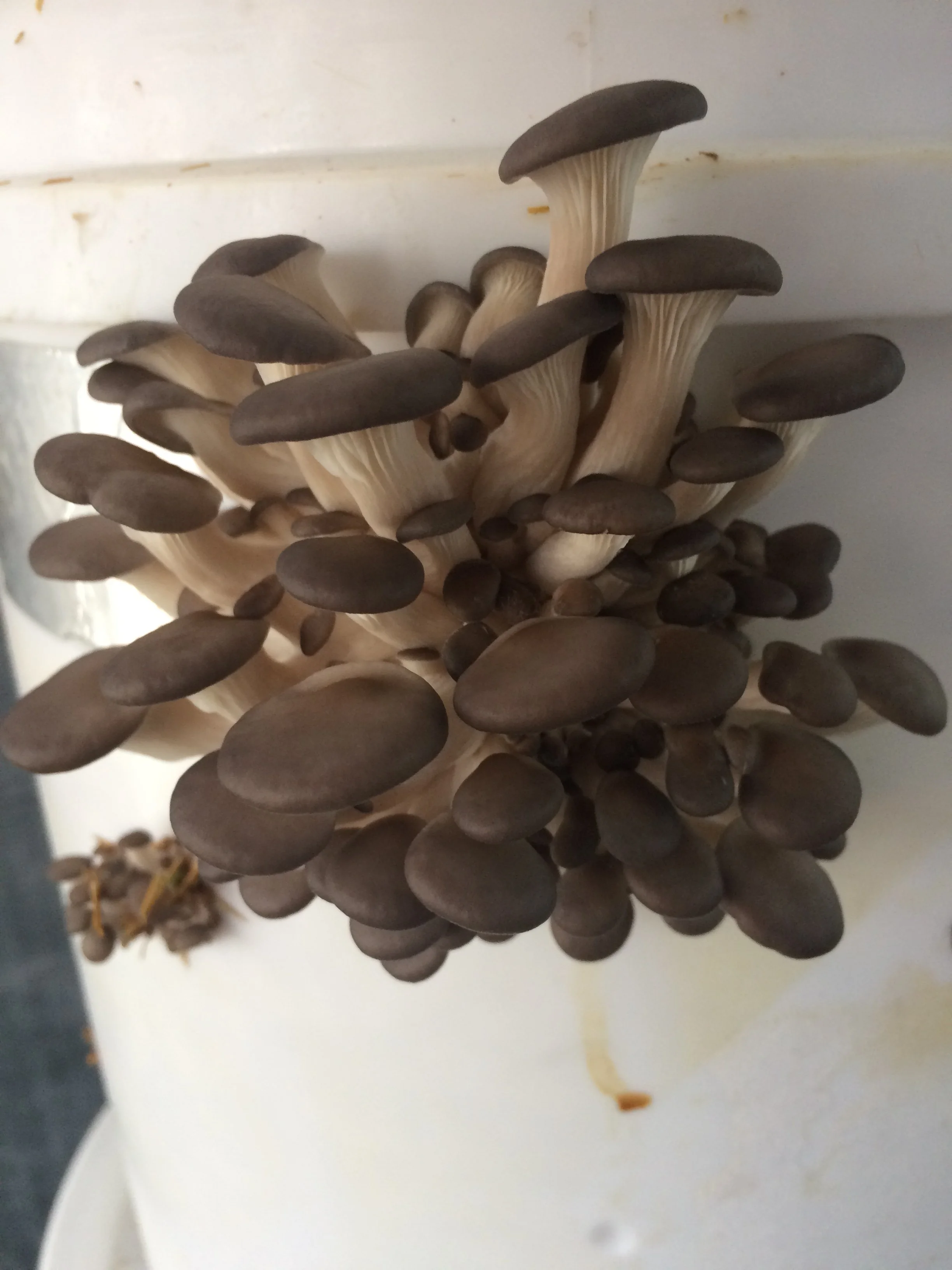
Medicinal Info
We provide the information below for your own personal learning and encourage you to explore the use of these supplements as part of a holistic care routine, in consultation with your own health care professionals.
Statements on this site have not been evaluated by the Food and Drug Administration. This product is not intended to diagnose, treat, cure, or prevent any disease. By FDA regulations tincture extracts are considered a nutritional supplement.


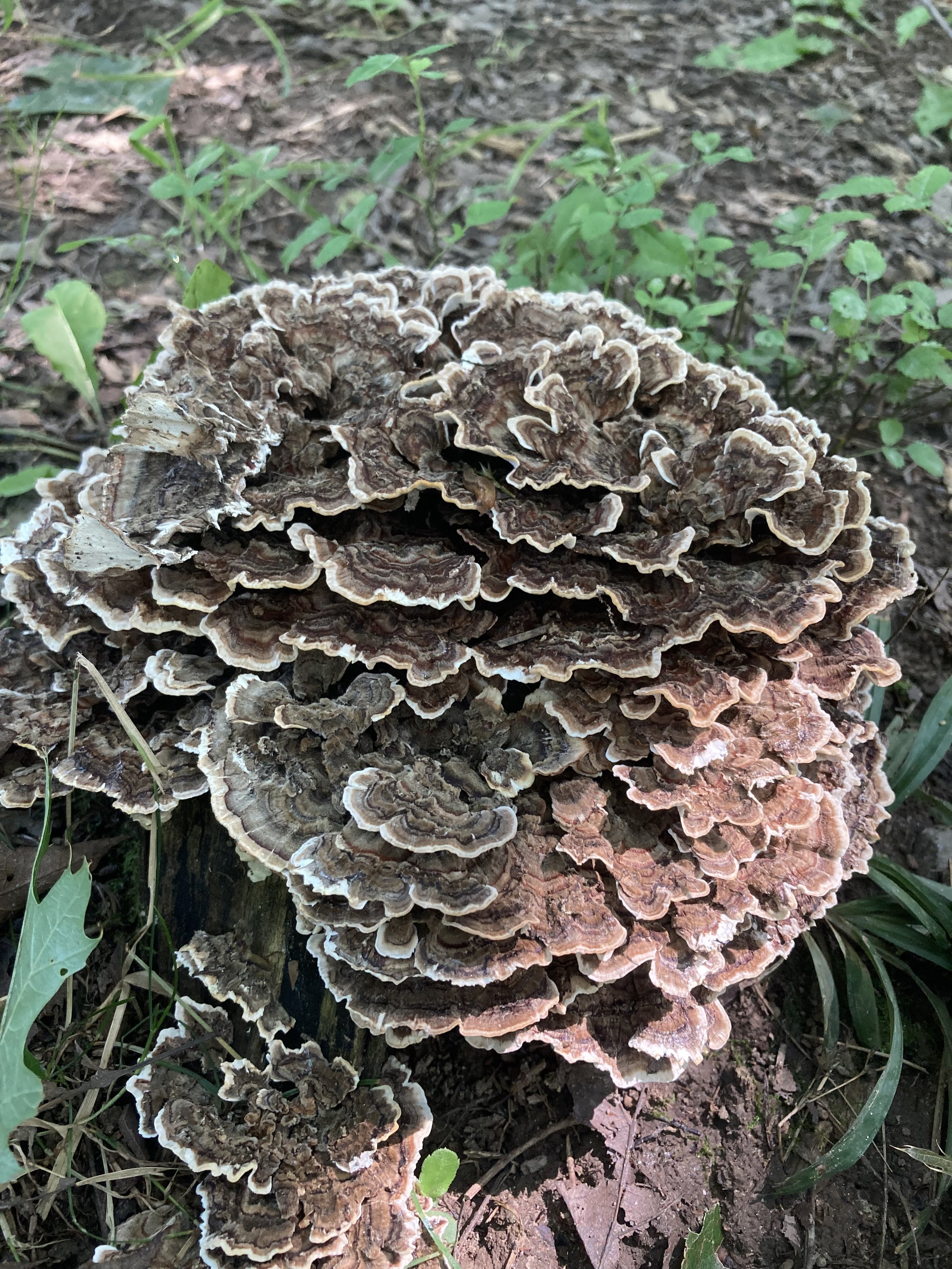
Cooking with Mushrooms
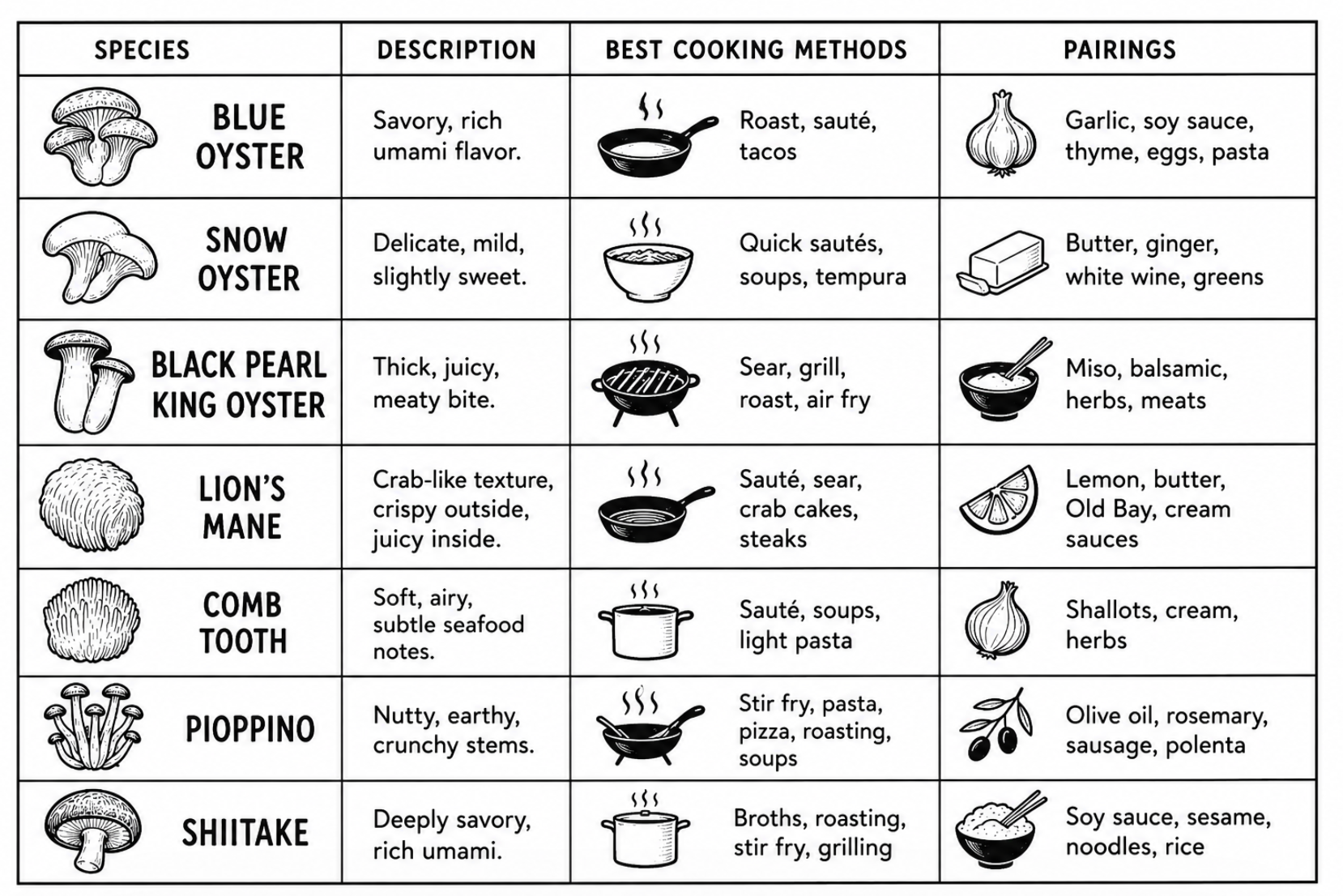
Storage, Cooking, and Preservation
-
Mushrooms are still alive when you bring them home. They breathe, they lose moisture, and they keep changing right up until they hit the pan. This is exactly what makes them so good!
When stored properly, fresh mushrooms hold for about one week. We recommend storing them in the fridge in a paper sack or a container with a loose lid. Avoid sealed plastic because trapped moisture is what turns a beautiful mushroom cluster slimy.
For best storage, we recommend not washing the mushrooms as water can degrade the quality.
To learn more about storage techniques that can extend your harvest, visit our Basic Storage and Cooking page!
-
It’s important to always cook your mushrooms for at least a few minutes over medium heat.
Mushroom cell walls are built from chitin and heat is what breaks those bonds down. This is especially important to allow your body to absorb the nutrition fully and avoid digestive upset or allergic reaction.
We love to dry sauté mushrooms which involves pre-heating a pan over medium heat and adding the mushrooms in without oil or water. This allows the moisture to cook off and is especially effective if you do not crowd the pan as that will steam the mushrooms instead.
Once the moisture is cooked off and the mushrooms have begun to brown, then they are ready for flavoring!
To learn more about the steps of dry sautéing, visit our Basic Storage and Cooking page!
-
Freezing can work as a good method for preserving mushrooms, but it's important to understand how it can affect their quality and determine the best method for your intended use.
Proper preparation before freezing mushrooms can help maintain their freshness, texture, and nutrients.
A few ways you can prepare your mushrooms for the freezer include roasting and blending, steam blanching, or dry sautéing.
To learn more about how you can preserve mushrooms in the freezer, visit our Preservation by Freezing page!
-
Drying is the oldest and most widespread way to preserve mushrooms. Long before refrigeration, it was how mushrooms traveled from forest and farm to market.
Fresh mushrooms are heavy with water, fragile, and quick to spoil; drying solves all three problems at once, cutting weight, halting spoilage, and making months of storage possible without ice, fuel, or specialized containers.
To learn more about preserving mushrooms by drying them, visit our Preservation by Dehydrating page!
